Carbon Reduction Strategies for Industries
Date: 6/10/2025 12:00:00 AM
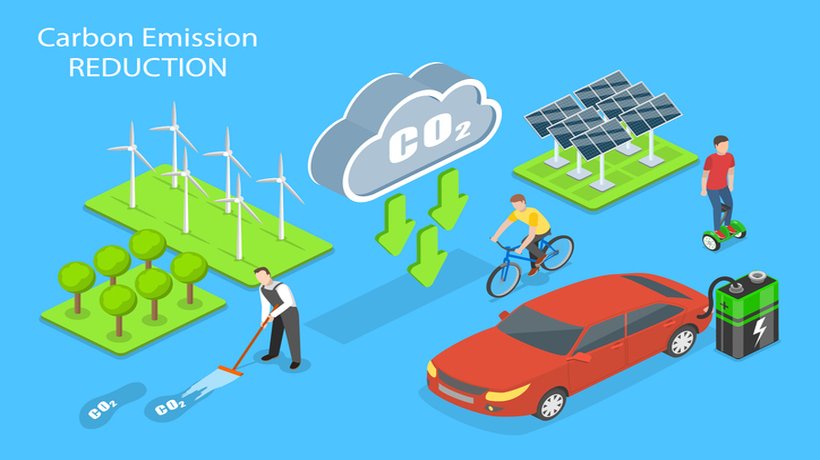
In the face of climate change, industries worldwide are increasingly recognizing the need to reduce carbon emissions. Governments, businesses, and consumers are pushing for sustainable solutions, and carbon reduction has become a crucial corporate responsibility. This article explores key carbon reduction strategies, regulatory frameworks, the benefits of implementing sustainable practices, and how Advantech can help with carbon reduction in industrial sectors.
What is Carbon Reduction?
Carbon Reduction
Carbon reduction refers to efforts to decrease the amount of carbon dioxide (CO2) and other greenhouse gases (GHGs) released into the atmosphere. Various approaches exist, including energy efficiency improvements, the transition to renewable energy, and carbon offset initiatives. Below are key concepts associated with carbon reduction:
Carbon Neutrality
Carbon neutrality means achieving a balance between emitted carbon and carbon offset through activities like reforestation and carbon capture and storage (CCS). A company or nation is considered carbon-neutral when its net carbon emissions equal zero.
Net-zero
Net-zero expands on carbon neutrality by requiring that all greenhouse gas emissions be reduced as much as possible, with only unavoidable emissions offset. Net-zero is a key goal for many governments and corporations committed to sustainability.
Carbon Offsetting
Carbon offsetting involves investing in environmental projects, such as afforestation, renewable energy, and methane capture, to compensate for emissions produced elsewhere.
Comparison of Key Carbon Strategies
| Concept |
Definition
|
Approach |
Key Difference |
| Carbon Reduction |
Reducing carbon emissions through energy efficiency, renewable energy, and sustainable practices. |
Focuses on direct emission cuts at the source. |
The most fundamental approach, aiming to prevent emissions rather than compensate. |
| Carbon Neutrality
|
Balancing emissions with offsets like reforestation or carbon capture.
|
Offsetting unavoidable emissions. |
Allows emissions but compensates them elsewhere. |
| Net-Zero |
Reducing emissions to the lowest possible level before offsetting residual emissions. |
Reduction first, offsetting only residual emissions. |
Stricter than neutrality, aims for minimal emissions. |
| Carbon Offsetting |
Funding projects that reduce or capture carbon elsewhere. |
Used as a supplementary measure. |
Does not directly reduce emissions at the source.
|
Why Carbon Reduction Matters
Reducing carbon emissions is essential for mitigating climate change and creating a sustainable future. Below are key reasons why carbon reduction is important:
Environmental Benefits
- Cleaner Air & Water: Reducing industrial emissions leads to improved air quality and cleaner water sources, benefiting public health and ecosystems.
- Slowing Climate Change: Lower carbon emissions help curb global warming, reducing extreme weather events and rising sea levels. Biodiversity
- Preservation: Sustainable practices protect natural habitats, ensuring the survival of various plant and animal species.
Economic Opportunities
- Green Economy Growth: The shift to renewable energy and sustainable business models opens new markets and investment opportunities.
- Job Creation: Industries focused on clean energy, carbon capture, and sustainability generate employment in sectors such as solar, wind, and energy efficiency solutions.
- Cost Savings: Implementing energy-efficient technologies and waste-reduction strategies lowers operational expenses and enhances long-term profitability.
Corporate Reputations
- Brand Image & Consumer Trust: Companies that prioritize sustainability attract environmentally conscious consumers and investors. Regulatory
- Compliance: Proactive carbon reduction helps businesses meet government regulations, avoiding fines and legal risks.
- Competitive Advantage: Sustainability commitments can differentiate companies in the market and create new business opportunities.
Carbon Reduction Policy and Regulatory Landscape:
To address climate change and meet global emission targets, governments and regulatory bodies around the world have implemented various policies and frameworks aimed at carbon reduction. These include legally binding international agreements, national legislation, and widely adopted corporate disclosure standards.
International Agreements:
Paris Agreement
The Paris Agreement is a legally binding international treaty adopted by nearly all nations in 2015, aiming to limit global warming to well below 2°C, preferably to 1.5°C, compared to pre-industrial levels. It sets the foundation for national commitments (Nationally Determined Contributions - NDCs) to reduce greenhouse gas emissions.
Kyoto Protocol
The Kyoto Protocol, adopted in 1997, was the first major international treaty that set legally binding emission reduction targets for developed countries. Though largely succeeded by the Paris Agreement, it remains significant in shaping today’s climate frameworks.
Regional and National Legislation:
EU Emissions Trading System (EU ETS)
The EU ETS is the world’s largest carbon market, operating on a cap-and-trade principle. It sets a cap on the total amount of greenhouse gases that can be emitted by installations covered by the system and allows trading of emission allowances to incentivize reductions.
Clean Air Act (United States)
The U.S. Clean Air Act empowers the Environmental Protection Agency (EPA) to regulate greenhouse gas emissions from major sources, including power plants and industrial facilities. It serves as a cornerstone of U.S. climate policy.
Indirect Policies and Corporate Frameworks:
Carbon Border Adjustment Mechanism (CBAM)
Introduced by the European Union, CBAM imposes a carbon price on imports of certain goods from outside the EU to prevent carbon leakage and encourage cleaner production methods globally.
Corporate Sustainability Reporting Directive (CSRD)
The CSRD mandates comprehensive sustainability reporting for large companies operating in the EU, including detailed disclosure of environmental and climate-related impacts, risks, and targets.
Task Force on Climate-related Financial Disclosures (TCFD)
TCFD provides a globally recognized framework for companies to disclose climate-related financial risks and opportunities, enhancing investor decision-making and promoting market transparency.
Science Based Targets initiative (SBTi)
SBTi helps companies set emission reduction targets in line with climate science and the goals of the Paris Agreement, pushing corporate strategies toward decarbonization.
CDP (formerly Carbon Disclosure Project)
CDP is a global disclosure system that enables companies, cities, and governments to measure and manage environmental impacts. It is widely used for reporting carbon emissions, climate strategies, and progress toward sustainability goals.
How to Build a Business Carbon Reduction Program?
Implementing a Business Carbon Reduction Program involves a structured approach to managing and reducing carbon emissions across an organization. Companies need to follow key steps and utilize various tools to ensure effective carbon management and compliance with sustainability goals.
1. Establish Clear Objectives and Scope
Companies must define their carbon reduction goals, considering industry standards, regulatory requirements, and long-term sustainability commitments. Establishing a clear scope ensures targeted efforts.
2. Conduct a Baseline Emissions Inventory
A comprehensive greenhouse gas (GHG) emissions assessment helps organizations understand their carbon footprint. This includes measuring Scope 1, 2, and 3 emissions using standard reporting frameworks such as the GHG Protocol.
3. Set Targets and Key Performance Indicators
Businesses should establish measurable targets aligned with international climate goals, such as the Science-Based Targets initiative (SBTi). Key performance indicators (KPIs) help track progress and ensure accountability.
4. Implement Carbon Reduction Strategies
Companies can adopt various strategies to lower emissions, such as improving energy efficiency, switching to renewable energy, optimizing logistics, and investing in carbon capture technologies.
5. Monitor, Report, and Adjust
Continuous monitoring and reporting allow businesses to evaluate progress and make necessary adjustments. Sustainability reporting frameworks like the Global Reporting Initiative (GRI) and Task Force on Climate-related Financial Disclosures (TCFD) provide structured reporting methodologies.
A Deep Dive into Advantech's Carbon Reduction Solutions
Advantech offers a suite of solutions to assist businesses in managing and reducing carbon emissions. These solutions align with the six key steps of the Business Carbon Reduction Program, helping enterprises transition toward sustainable operations efficiently.
Solution 1: ECOWatch – Real-time Energy Monitoring and Management
WISE-IoT's ECOWatch enables businesses to monitor, analyze, and optimize their energy consumption in real time.
This tool can be applied on:
- Conduct a Baseline Emissions Inventory (Step 2):ECOWatch tracks energy usage and identifies inefficiencies to establish an accurate emissions baseline.
- Monitor, Report, and Optimize (Step 5) : Provides continuous monitoring and real-time alerts to track progress and optimize energy efficiency.
Solution 2: HVAC Energy Efficiency Management
HVAC of Advantech utilizes AI, IoT, and digital twins to optimize HVAC operations, reducing energy waste. The app can improve the efficiency at two steps of Business Carbon Reduction Program:
- Implement Carbon Reduction Strategies (Step 4) :Helps organizations optimize HVAC performance to lower emissions and energy consumption.
- Monitor, Report, and Optimize (Step 5): Provides real-time diagnostics and AI-driven insights for ongoing efficiency improvements.
Solution 3: Air Compressor Monitoring (Compressor I.App)
Advantech's Compressor system improves air compressor efficiency , reduces unnecessary energy use and promote the implement of carbon reduction:
- Implement Carbon Reduction Strategies (Step 4):Optimizes energy-intensive equipment for better efficiency.
- Monitor, Report, and Optimize (Step 5):Tracks compressor performance to ensure sustained energy savings.
Solution 4: CarbonR – Carbon Inventory and Compliance Management
WISE-IoT's CarbonR helps businesses track and manage their carbon footprint in compliance with ISO 14064 and ISO 14067 standards. The product can make use of reducing carbon:
- Conduct a Baseline Emissions Inventory (Step 2): Automates carbon footprint tracking to establish an emissions baseline.
- Set Targets and KPIs (Step 3): Provides data-driven insights to support science-based emission reduction targets.
Advantech is dedicated to empowering businesses to seamlessly transition toward sustainable operations by integrating smart technology, real-time analytics, and AI-driven insights.
Contact Us
Take the next step toward a greener future by partnering with Advantech. We can create actionable plans to meet today’s challenges and pave the way for long-term resilience. Visit Advantech's Sustainability Solutions to learn more or contact us for a consultation.